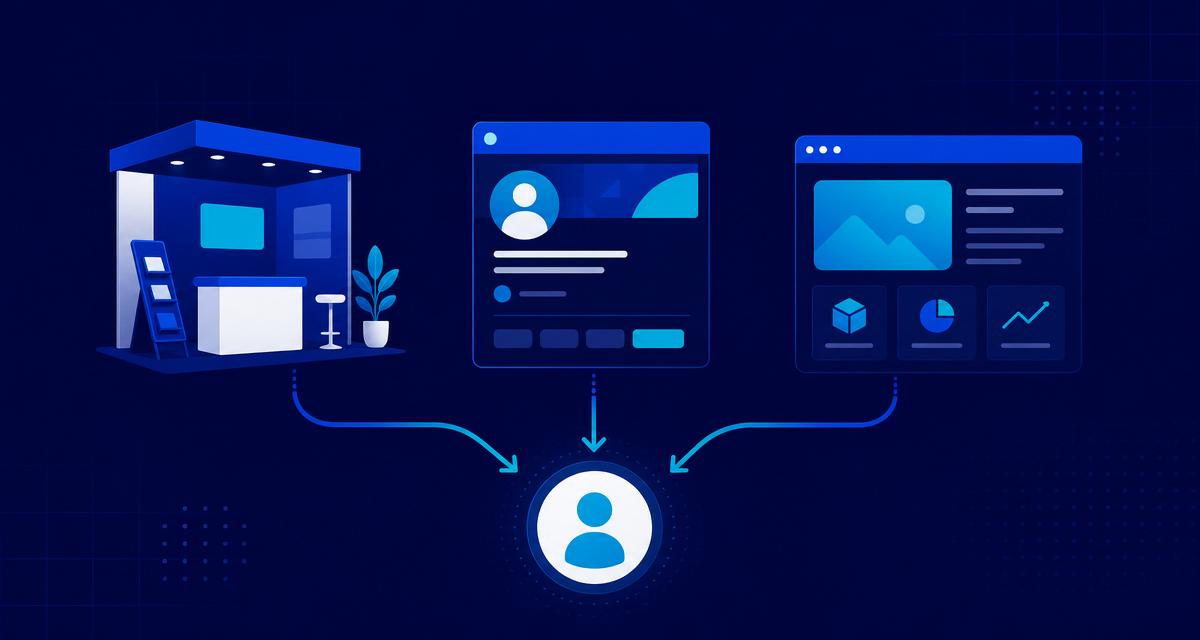
You have limited hours and limited money. The three places small B2B teams typically spend both are: trade shows, LinkedIn, and their own website. Below is what each is genuinely good for, what each is bad for, and how to decide what to reinforce next quarter.
Trade shows
Good at: dense face time with people who are already in the industry, brand credibility (you had a booth = you exist), catching senior buyers who don’t reply on any digital channel. Bad at: scale, follow-up beyond four weeks, being measurable. Cost per meaningful lead is high, but the meaningful leads are often the best ones.
The honest trap: teams spend €30,000 on the booth and €0 on the follow-up. The booth is a starting pistol, not the race.
Good at: reaching individual decision-makers by name, warm reactivation of dormant contacts, low-cost brand consistency by posting your team’s point of view. Bad at: cold DM outreach at scale (buyers built calluses), predictable pipeline volume, ROI attribution beyond your patience.
Best used as: an amplifier for whatever you’re already doing well elsewhere. It is not, by itself, a first channel for most sub-€50k deals.
Your own website
Good at: passively catching the buyers already researching you, staying open 24/7, being the one asset you actually own (nobody can change the terms next quarter). Bad at: generating demand from strangers on its own; it converts existing demand, it rarely creates it.
With visitor identification switched on, your website also becomes a passive lead-gen surface: it tells you which businesses looked, so you can reach out even when they didn’t fill anything. That’s the small tilt that changes the economics.
| Situation | Best next euro |
|---|---|
| No brand at all in the industry yet | One well-chosen trade show |
| Have inbound traffic but few conversations | Website + visitor identification |
| Have LinkedIn following but not pipeline | Convert LinkedIn to inbound landing pages |
| Have dormant CRM contacts | LinkedIn reactivation posts |
| Have booked meetings but low close rate | None of the above — fix the sales motion |
Plain word
‘Inbound' just means: leads that come to you because they found something you already published. ‘Outbound' is you going to them cold.
How they stack together
None of these three is a strategy on its own. A workable small-team stack is: one flagship trade show a year for the brand credibility, a weekly LinkedIn post from a real human, and a website with visitor identification so you catch the people that show up because of the first two. Three moving parts. Nothing exotic.
The most common mistake
Over-investing in whichever channel your competitor is loudest on. If a competitor is spending on LinkedIn ads, that says something about their budget, not about what actually converts for buyers in your niche. Do the boring exercise: ask your last five customers where they first heard of you, and let the answer set your budget mix for next quarter.
- Related: [Trade shows are back — your follow-up shouldn’t be from 2019](/blog/trade-shows-are-back-your-follow-up-shouldnt-be-from-2019)
- Related: [Cold outreach is dying — warm signals won](/blog/cold-outreach-is-dying-warm-signals-won)
- Related: [Your website is your best SDR](/blog/your-website-is-your-best-sdr)

Published by
lead.box Team
More articles
See lead.box on your own traffic
Start free — no card, no sales call required. Or book a 20-minute walk-through if you want the guided tour.